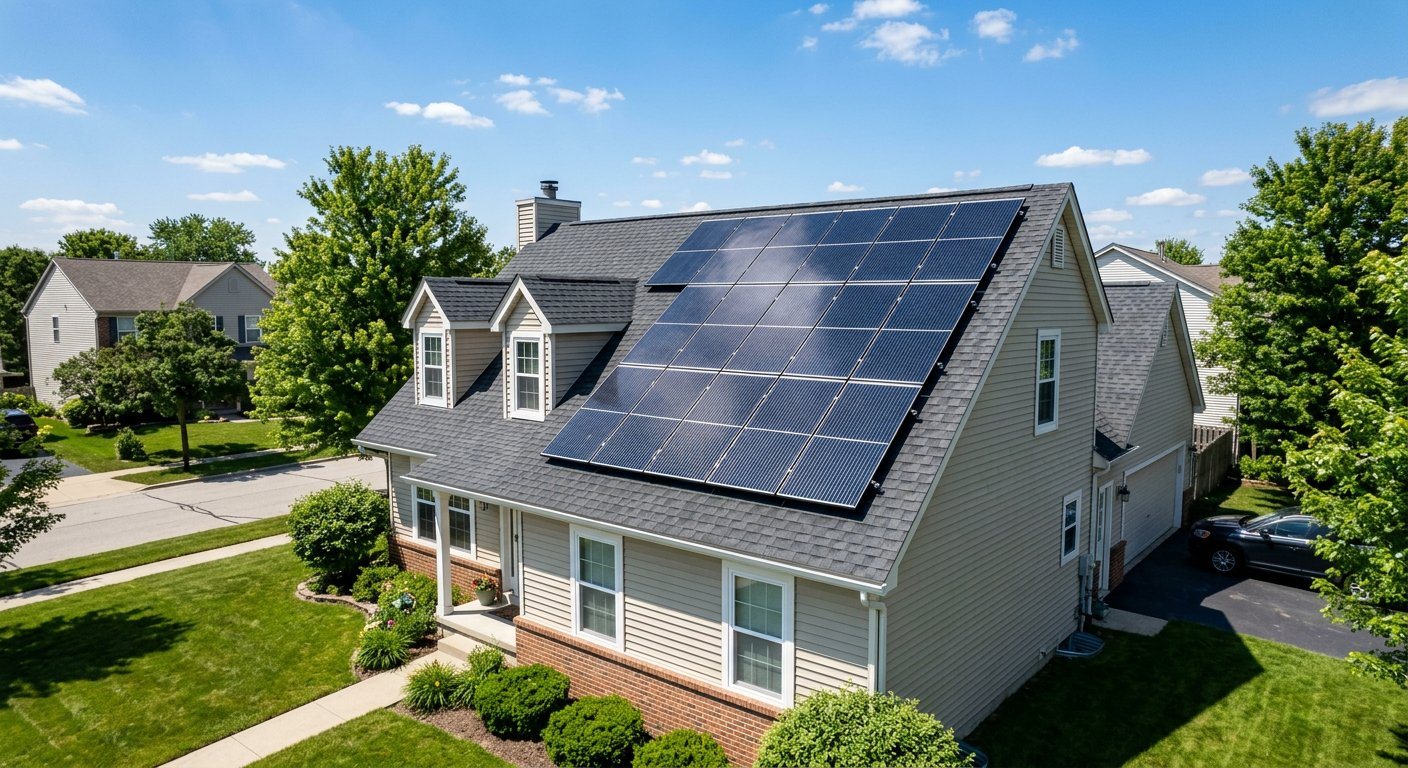
Roofing and solar are the two projects homeowners most often consider at the same time — and for good reason. Both involve the same sloped surface, the same scaffolding and the same disruption. Sequencing them badly is expensive; sequencing them well can save thousands and years of avoidable fuss.
Why the order of work matters
Solar panels are mounted on a roof and generally last for decades. Roof shingles do not last quite as long. If you install panels over a roof that still has life left in it, you will eventually be paying to remove and reinstall the whole array just to replace the covering underneath.
That is the single strongest argument for planning them together: roof first, then solar. Do it the other way around and you have effectively doubled the labour for your future self.
Check the roof before anything else
Before considering solar, have the roof assessed honestly. Look for:
- Age and remaining service life of the existing covering.
- Cracked, lifted or missing shingles and any signs of granules collecting in gutters.
- Flashing around chimneys, vents and skylights — the usual first points of failure.
- Attic ventilation and insulation, because heat and moisture affect both roof life and comfort.
If the roof has plenty of dependable service remaining, solar on top is a sensible step. If it is nearing the end of its life, replace it first and your new covering and your new array can start their lives together.
When combining the two makes sense
Ideally, the work is planned as one project even when it is staged across different visits:
- The covering is replaced, flashing upgraded and ventilation corrected.
- Mounting points, conduit routes and the path to the electrical panel are agreed in advance.
- Solar is installed on a sound, warrantied roof with clean, well-planned penetrations.
One crew sequencing both parts means fewer holes in the roof overall, fewer trades negotiating over the same flashing detail, and one clear point of responsibility if something ever needs attention.
Solar is only as dependable as the surface beneath it. A generous roof assessment is the most valuable part of any array.
Mounting, ventilation and drainage
Where the array sits affects more than appearance. Panels should be set out to respect roof structure, avoid shading from vents and chimneys, and allow safe access for maintenance. Mounting posts and rails must be anchored into sound framing with seals that will not fail after a hard winter.
Ventilation matters too. A roof that breathes properly manages moisture better and stays cooler in summer, which helps both the house and the equipment above it. And drainage is worth a thought — leaves and debris collect around arrays, so keep gutters clear and check that new flashings shed water where it should go.
Paperwork worth sorting early
Roofing rarely needs much administration, but solar often does. Before work begins, confirm which permits or approvals are required in your area, what documentation your electricity provider expects, and how the system will be connected and metered.
Also collect the warranty documents for the roof covering, the mounting hardware and the solar equipment, and register each one. Ask how a warranty claim would work in practice if a leak appeared at a mounting point later — good contractors answer that question without flinching.
Questions to ask a contractor
- Does the roof have enough dependable service life to justify mounting an array now?
- Who is responsible for the roof warranty, and who covers the mounting penetrations?
- How much of the work can be sequenced to avoid scaffolding twice?
- What happens if shade patterns suggest a smaller or differently placed array would perform better?
- Will you show me the ventilation and flashing details in writing before installation?
Clear answers to those questions tell you more about a company than any glossy brochure.
The bottom line
If both projects are on your horizon, plan them as one. Start with an honest roof assessment, then design the array around a sound surface with well-specified waterproofing details. Doing it in that order protects your investment, avoids unnecessary labour, and lets you enjoy a quieter, drier, sun-powered home for years to come.