A garden should not be a second job. The most beautiful low-maintenance backyards are not sparse or boring — they are simply designed so that plants, paving and lighting do the work that a hose and a weekend of pruning used to do.
Here is how we approach it on the projects we build, from the first sketch to the first autumn.
Design for less work
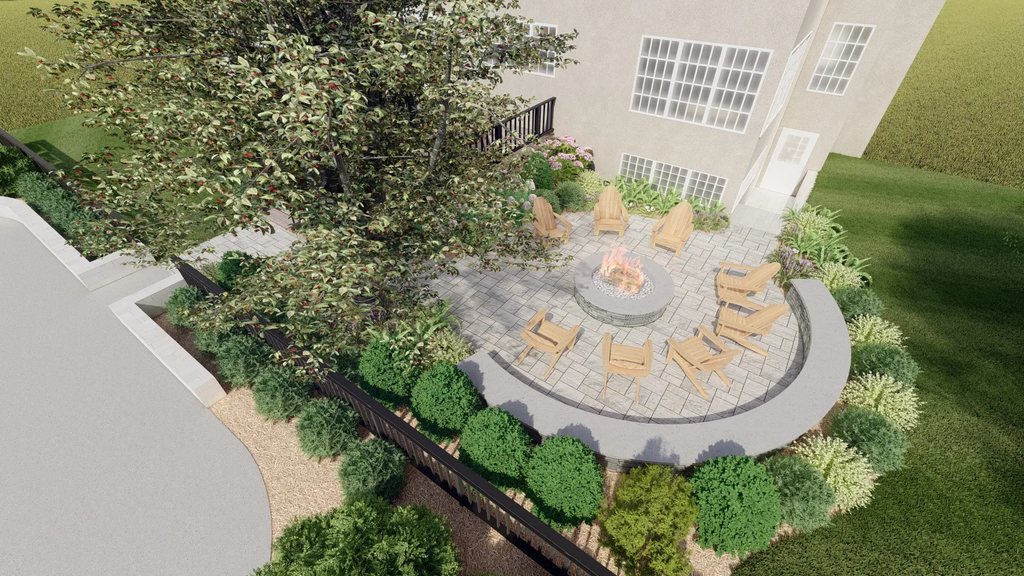
Start from the way you actually live outdoors. If you want to drink coffee outside before work, the seating area should be a step from the kitchen door, not at the far end of the lawn. If evenings with friends matter most, plan the fire pit or dining space where the last of the sun lingers.
Gather your outdoor life into a smaller, well-designed zone and you reduce the area you need to maintain. A generous patio with deep planting beds at the edges often looks more established than a large lawn dotted with struggling shrubs — and it demands far less upkeep.
Right plant, right place
Choose plants for the conditions you already have rather than the conditions you wish you had. A shade plant placed in full sun will always look tired, no matter how much you water it.
- For sun-baked beds: lavender, sedum, ornamental grasses and rosemary, which shrug off dry spells.
- For shade: hostas, ferns, hellebores and heuchera, which reward you with texture instead of demanding light.
- For structure with almost no pruning: dwarf conifers, boxwood alternatives and evergreen shrubs chosen for slower growth.
- For seasonal colour: spring bulbs that return on their own, followed by perennials that flower and fade without fuss.
Group plants by their water needs so that one hose setting does not drown half the bed while the other half stays dry. Layering taller plants behind mid-height ones and groundcover in front creates a full look that weeds struggle to invade.
Hardscape that ages beautifully
Paving does the heavy lifting in a low-maintenance garden, so it is worth doing properly. Wide, level paths with a firm base and a slight fall away from the house keep water moving and prevent the sinking and rocking that turn walkways into tripping hazards.
Choose materials that improve with weathering — natural stone, quality concrete pavers, gravel with a stabilising grid — over anything that needs annual sealing or resanding. Gravel can be brilliant for a low-effort courtyard, provided it is laid over a proper base with an edging restraint so it stays where you put it.
Watering without worry
Every hour spent watering is time not spent enjoying the garden. Two moves reduce it dramatically: mulch generously, and water deeply but less often so roots grow downward instead of living near the surface.
If you want to go further, a drip system on a simple timer delivers water straight to the roots where it is used and not to the paving where it evaporates. Adding a rain sensor or a soil moisture device keeps the system from watering during a rainstorm — a small addition that pays for itself in both water and plant health.
Lighting that multiplies your evenings
Outdoor lighting transforms how much you use a garden. Keep it restrained and layered: warm uplights on a tree or wall, low path lights for safety, and a soft glow behind a bench rather than a bright beam aimed at the seating area.
Choose durable, weather-rated fittings and put everything on easy-to-reach controls, ideally with a timer so the garden lights itself and switches off when you are already inside.
A gentle seasonal rhythm
Low-maintenance does not mean no maintenance. It means the work is brief and predictable:
- Spring: refresh mulch, check irrigation and beat the weeds to it while they are small.
- Summer: deadhead a few showy flowering plants, and water deeply in the cool of the morning.
- Autumn: clear leaves from paving and drains, plant bulbs and cut back anything that has finished for the year.
- Winter: inspect structures, clean and store tools, and plan next year's improvements over a good cup of tea.
Mistakes that quietly cost you weekends
Three habits create most of the unnecessary work we are called in to fix: planting too densely in newly built beds, paving without a proper base, and scattering plants with very different water needs across the same border. Address those and the garden settles into a rhythm that looks after itself.
Get the bones right — levels, drainage, edging and irrigation — and the planting becomes the easy, joyful part.